


Located in the beautiful Wasatch Back, Morgan Valley offers a blend of rural charm, open space, and spectacular mountain access. It’s the kind of place where neighbors know each other, traffic is minimal, and outdoor recreation is part of daily life.
But like any move—especially to a scenic mountain community—it’s important to understand the financial side before making the leap. From housing prices to utilities and commuting costs, Morgan Valley presents a unique economic profile shaped by its location and lifestyle.
Whether you’re relocating for work, retirement, or simply a slower pace, having a clear picture of expenses will help you plan confidently. In this guide, we’ll break down everything you need to know about the Morgan Valley cost of living.
What Is the Average Morgan Valley Cost of Living?
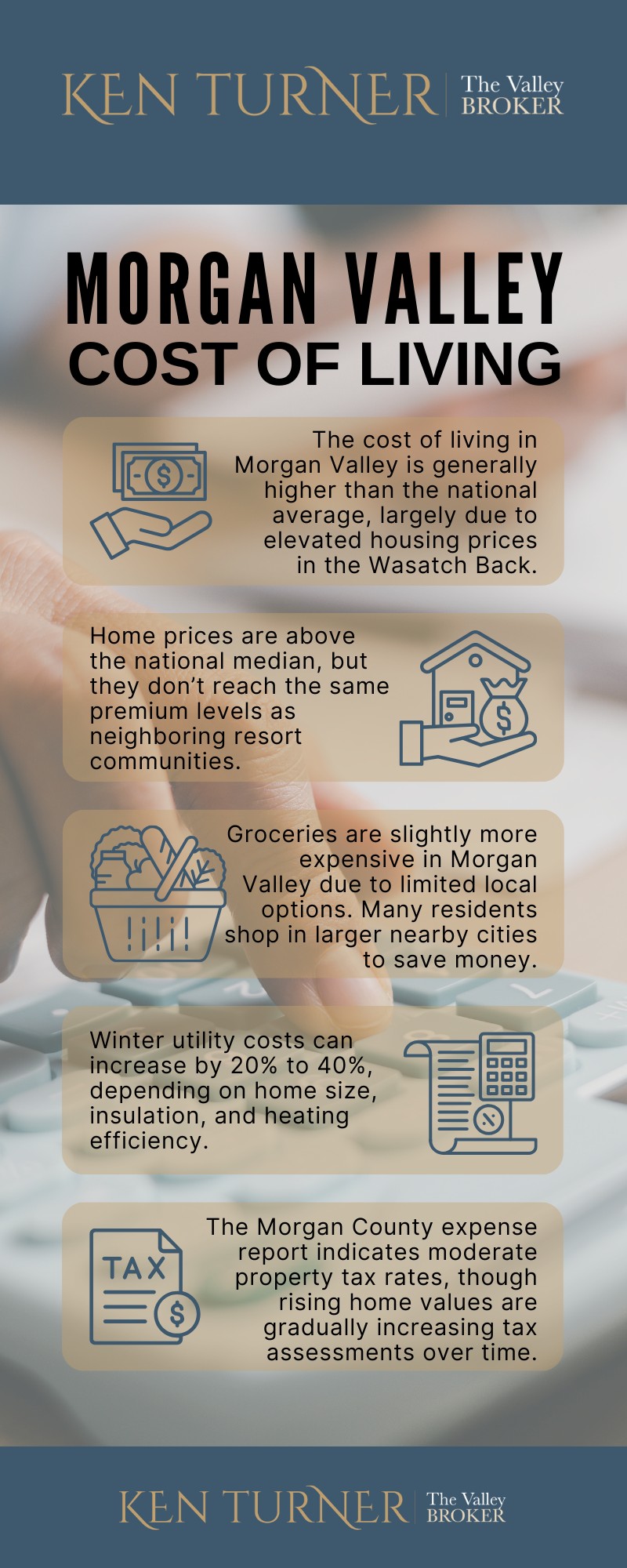
The cost of living in Morgan Valley is generally higher than the national average, largely due to elevated housing prices in the Wasatch Back. However, it remains more affordable than nearby resort markets, making it a balanced option for those seeking mountain living without extreme costs.

Analyzing Wasatch Back Real Estate Prices
The Local Housing Market
Housing is the single biggest factor influencing the Morgan Valley cost of living. Like many parts of northern Utah, property values have risen steadily over the past decade. However, Morgan Valley occupies a unique middle ground.
Compared to luxury destinations like Park City, Morgan offers significantly more value per square foot. Buyers often find larger lots, newer construction, and quieter surroundings at a lower price point.
While home prices here are still above the national median, they don’t reach the same premium levels as neighboring resort communities. This makes Morgan Valley particularly attractive for buyers who want proximity to skiing, hiking, and mountain living—without paying top-tier resort pricing.

Renting vs Buying
One of the biggest challenges in Morgan Valley is the limited rental inventory. Long-term rental options are scarce, and when they do become available, they’re often quickly leased.
Because of this, many newcomers find that purchasing a home is actually the more practical financial decision. Mortgage payments can be more predictable than fluctuating rental prices, and homeownership allows you to build equity in a market that has shown consistent growth.
If you’re planning to stay long-term, buying often provides greater stability than navigating the tight rental market.
Structuring Your Living in Morgan, Utah Budget

Community and Security
One of the most compelling aspects of living in Morgan Valley isn’t just financial—it’s lifestyle.
The community is known for being safe, welcoming, and family-oriented.
Compared to larger cities like Salt Lake City or even nearby Ogden, Morgan boasts extremely low crime rates.
This peace of mind is a major draw for families, retirees, and anyone looking to escape the hustle of urban living. While you may pay a premium for housing, many residents feel the trade-off is well worth it for the quality of life.
Transportation and Groceries
Because Morgan Valley is more rural, transportation plays a bigger role in your monthly expenses. Most residents rely on personal vehicles for commuting, errands, and school runs.
If you work in Ogden or Salt Lake City, daily commuting costs—fuel, maintenance, and winter driving wear-and-tear—add up quickly. Snowy conditions during the winter months can also increase vehicle maintenance expenses.
Groceries tend to be slightly higher than in larger metro areas due to fewer local options and transportation costs for goods. Many residents make occasional trips to nearby cities for bulk shopping to manage expenses.

Evaluating Northern Utah Mountain Community Costs
The Cost of Climate Control
Morgan Valley experiences all four seasons, including hot summers and cold, snowy winters. This means utilities can fluctuate significantly throughout the year.
Heating costs—primarily natural gas—can spike during winter months, while electricity bills increase in summer due to air conditioning. On average, residents should expect higher-than-average utility costs compared to more temperate regions.
Proper insulation, energy-efficient systems, and smart thermostat use can help manage these seasonal expenses.
Rural Infrastructure Considerations
Many homes in Morgan Valley, particularly those outside the town center, operate on private wells and septic systems.
This setup can reduce monthly water bills, which is a financial advantage. However, it also requires long-term planning for maintenance and occasional repairs. Septic systems need periodic servicing, and wells may require upkeep over time.
Savvy homeowners typically set aside funds annually to cover these future costs.
Reviewing the Morgan County, UT Expense Report
State and Local Taxes
Utah maintains a flat state income tax rate, which applies to Morgan Valley residents. While this rate is relatively moderate compared to some states, it’s still an important factor when calculating your overall cost of living.
Sales tax and other local fees also contribute to your monthly expenses, though they are generally in line with state averages.
Property Tax Reality
According to the latest insights from the Morgan County, UT expense report, property taxes remain relatively moderate compared to national averages. However, there’s an important trend to note.
As home values increase, property tax assessments are gradually catching up. This means homeowners may see incremental increases in their annual tax bills over time. While not excessive, it’s a cost that should be factored into long-term budgeting.
Morgan Valley Living Expenses Comparison Table
Here’s a quick snapshot to help visualize how living expenses in Morgan Valley compare to national averages:
| Expense Category | Morgan Valley vs National Average | Estimated Monthly Cost |
|---|---|---|
| Housing (Mortgage) | High (+30%) | $2,500 – $4,500+ |
| Property Taxes | Moderate (State Baseline) | Rolled into Escrow |
| Utilities (Elec/Water) | High (Seasonal) | $250 – $450 |
| Maintenance | Moderate (Snow Removal) | $100 – $300 |
| Transportation | Moderate to High (Commuter) | $250 – $450 |
Key Takeaway
The Morgan Valley cost of living represents a strategic balance between affordability and lifestyle. While housing and utilities are higher than the national average, the area delivers unmatched access to nature, space, and community.
For many buyers, it’s a smart alternative to pricier Wasatch Back destinations. With thoughtful planning—especially around transportation, utilities, and long-term maintenance—you can comfortably enjoy everything this scenic and historic valley has to offer.
If you’re considering a move and want a clear, personalized breakdown of what living here would look like financially, don’t hesitate to reach out. Whether you’re buying your first home or relocating for a lifestyle upgrade, having a local expert makes all the difference.
Call 801-940-9000 or email ken@ogdenvalleyproperties.com to start planning your move with confidence.
Frequently Asked Questions
Is it more expensive to live in Morgan Valley or Ogden, Utah?
Morgan Valley is generally more expensive than Ogden, primarily due to higher housing costs and limited inventory. However, Ogden offers more rental options and urban amenities.
What are the average utility premiums for a home in Morgan Valley during winter?
Winter utility costs can increase by 20% to 40%, depending on home size, insulation, and heating efficiency.
Is Morgan, Utah, a safe place to live for young families?
Yes, Morgan is widely regarded as one of the safest communities in northern Utah, with very low crime rates and a strong sense of community.
What is the typical commute time from Morgan to Salt Lake City?
Commute times typically range from 45 to 60 minutes, depending on traffic and weather conditions.
How do grocery prices in Morgan Valley compare to those in the broader Wasatch Front?
Groceries are slightly more expensive in Morgan Valley due to limited local options. Many residents shop in larger nearby cities to save money.
Do homes in Morgan typically require septic systems and private wells?
Yes, especially in more rural areas. While this can reduce monthly utility costs, it requires periodic maintenance.
What does a standard Morgan County, UT expense report say about property taxes?
The Morgan County, UT, expense report indicates moderate property tax rates, though rising home values are gradually increasing tax assessments over time.