


Ogden Valley, encompassing the mountain communities of Eden, Huntsville, and Liberty, is one of northern Utah’s most scenic and desirable places to live.
Anchored by Powder Mountain, Snowbasin, and Pineview Reservoir, it offers a lifestyle defined by outdoor adventure, fresh air, and wide-open spaces.
For those considering moving here, understanding the Ogden Valley cost of living is essential.
In this blog, we’ll break down the real financial realities of living in the Valley, including housing prices, property taxes, utilities and maintenance, lifestyle and recreation costs, and the trade-offs between Valley living and city life.
The Core Misconception
Many newcomers make the same mistake: relying on generic county-level cost-of-living indexes. Those broad metrics simply don’t capture the actual Ogden Valley living expenses.
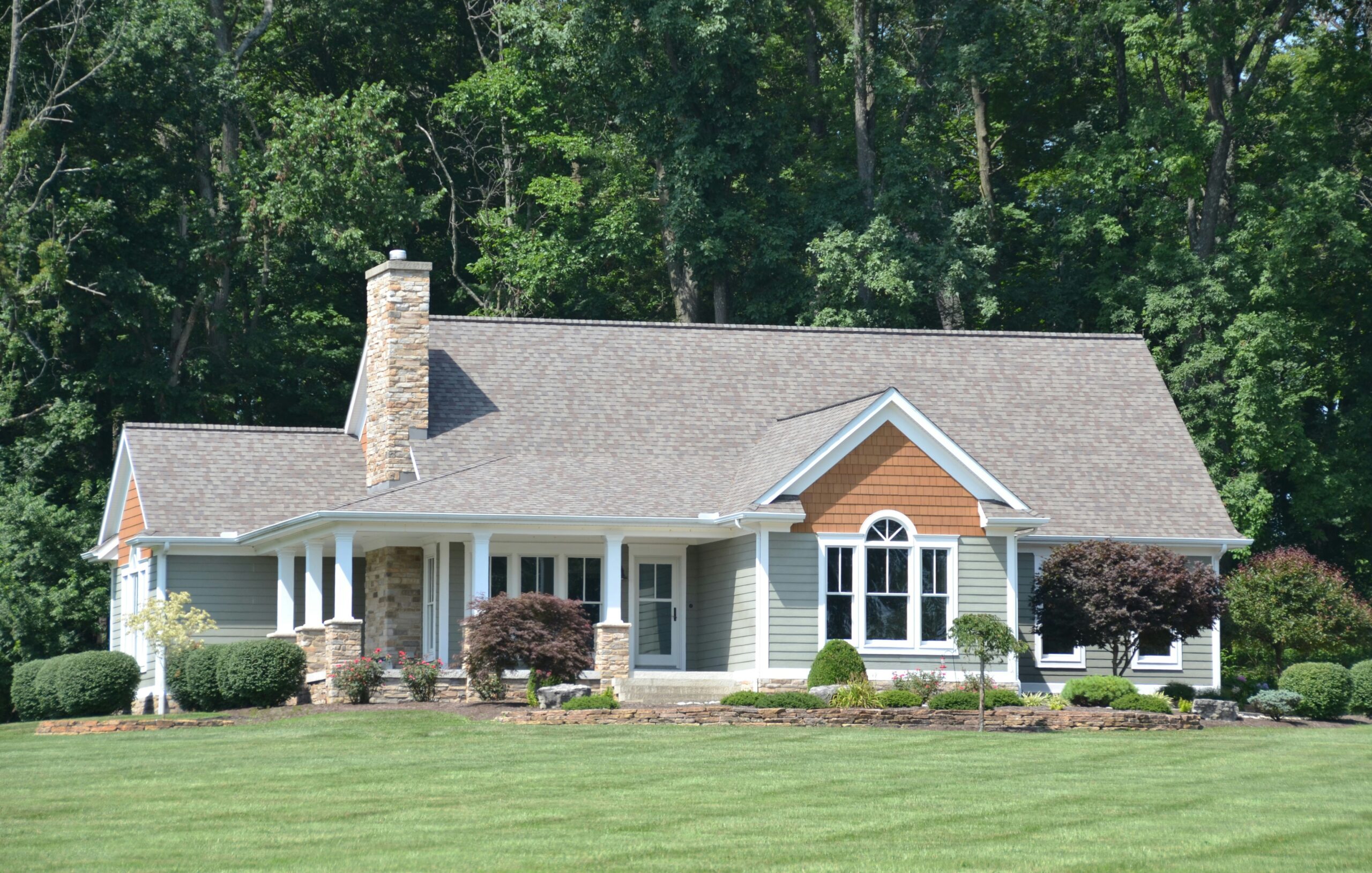
Homes here are often larger, custom-built, and sit on expansive lots with jaw-dropping views. That “mountain premium” isn’t just a cliché—it’s real. You’re paying for space, elevation, and direct access to recreation, not just square footage.
The lifestyle itself adds value, too. Living in the Valley isn’t just about a home—it’s about skiing before work, boating on Pineview in summer, or hiking out your front door. That kind of lifestyle carries costs, but for many, the payoff is worth every dollar.
Housing — The Mountain Premium
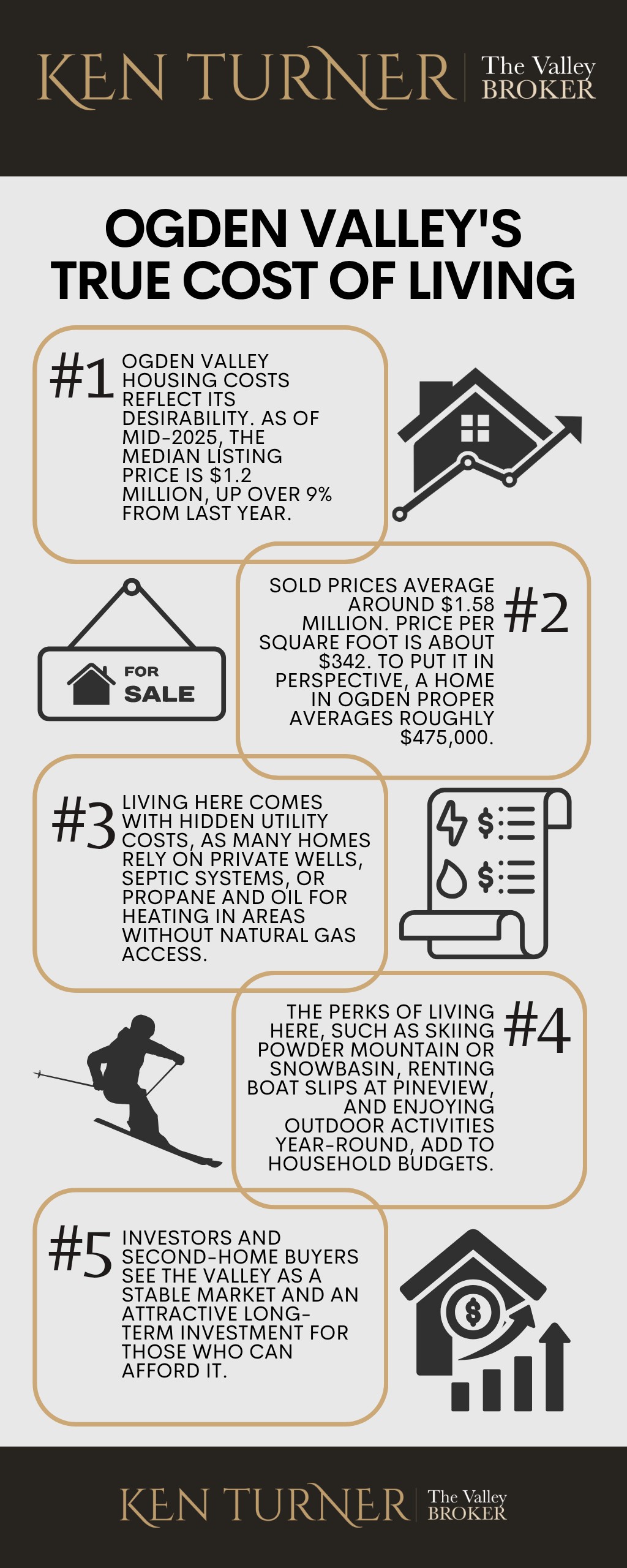
Ogden Valley housing costs reflect its desirability. As of mid-2025, the median listing price is $1.2 million, up over 9% from last year.
Sold prices tell a similar story, with averages hovering around $1.58 million and prices per square foot at about $342. To put it in perspective, a home in Ogden proper averages roughly $475,000.
Luxury and second homes dominate the landscape. Ski-view estates, custom cabins, and lakefront retreats make up a large portion of the market, and some serve as seasonal rentals.
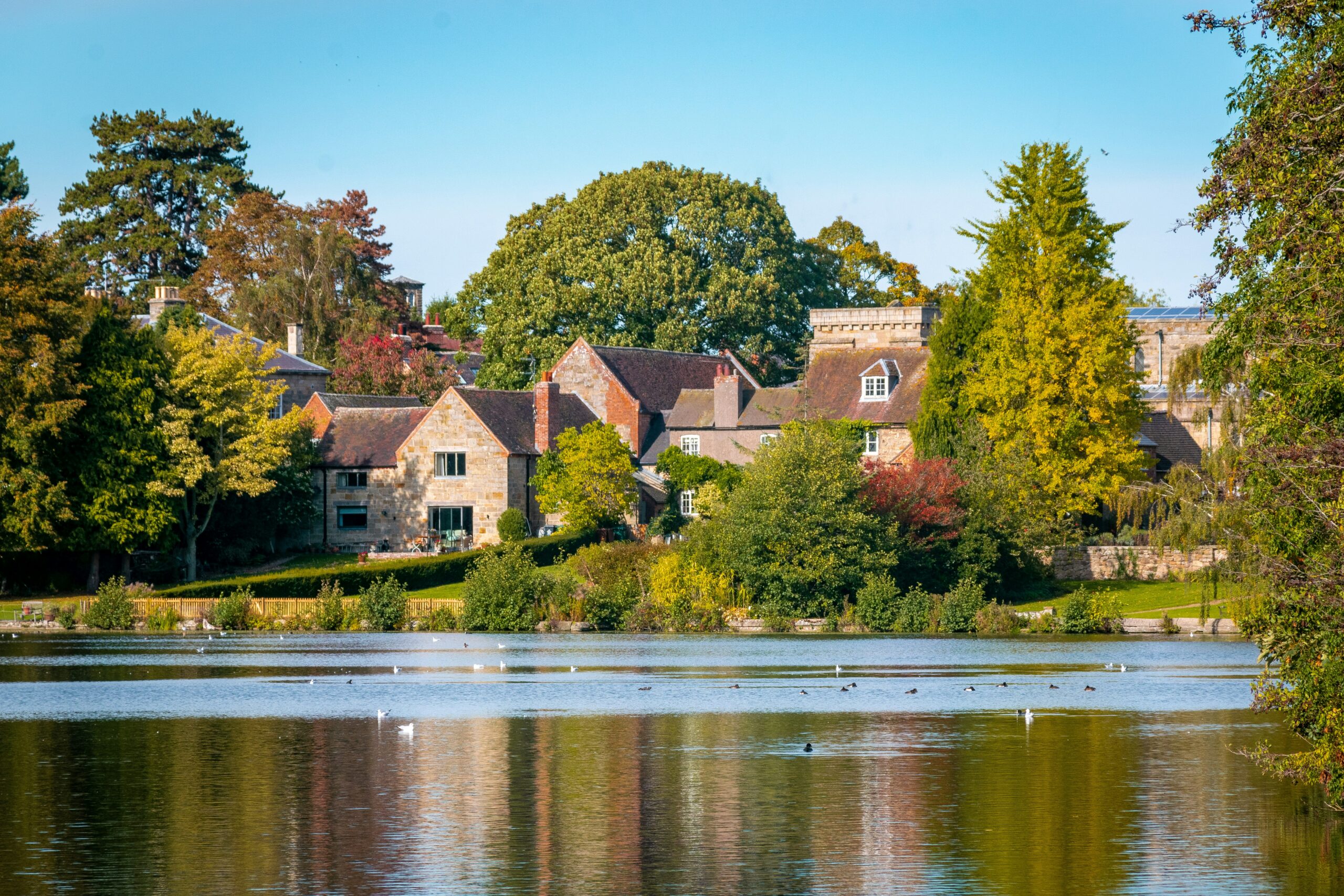
This mix sustains high property values and makes inventory competitive, especially during ski or summer lake seasons. Even for first-time buyers, entry-level options exist in Liberty, but affordability is relative—the Valley is firmly a premium market.

The Tax Puzzle: Understanding the Mill Levy
Property taxes in Ogden Valley are a combination of high assessed values and local assessment structures.
The Ogden Valley Parks Service Area carries a certified rate of 0.000064 for general operations. While modest on paper, the high property values translate to substantial annual tax bills.
Some neighborhoods fall within special service districts that fund road maintenance, water, and sewer infrastructure.
While there isn’t a separate “second-home tax rate,” owners of non-primary residences naturally pay more due to higher assessed values. Knowing this upfront helps prevent surprises when tax season arrives.
Utilities and Maintenance: The Hidden Costs
Living in the mountains comes with hidden utility costs. Many homes rely on private wells, septic systems, or propane and oil for heating in areas without natural gas access. Large homes and long winters make utility costs in Ogden Valley more substantial than in the city.
Snow removal is another unavoidable expense. While county-managed roads get plowed, private roads or HOA-managed communities require residents to contribute.
This is a practical but often underestimated cost—winter in the Valley is beautiful, but it comes with responsibilities.
Lifestyle and Recreation Costs
The perks of Ogden Valley living don’t come free. Skiing Powder Mountain or Snowbasin, renting boat slips at Pineview, and enjoying outdoor activities year-round add to household budgets.
Dining and local retail are limited, which can mean higher prices for groceries and daily necessities. Commuting to Ogden or beyond for work, shopping, or services adds fuel and vehicle wear-and-tear to the mix.

The good news? Every cost comes with a lifestyle payoff: easy access to the outdoors, unparalleled mountain views, and a tight-knit community of like-minded neighbors who value the same lifestyle.
Valley vs. City: A Cost Comparison
Choosing between Ogden Valley and Ogden City comes down to trade-offs. In the city, you get convenience, lower housing costs, and abundant services.
In the Valley, you pay a premium—median home prices are over $1.2 million—but in return, you gain seclusion, nature access, and a year-round playground for outdoor recreation.
Investors and second-home buyers see the Valley as a stable market. Luxury properties, vacation rentals, and limited inventory support value retention, making it an attractive long-term investment for those who can afford it.
Frequently Asked Questions
Does living in the Ogden Valley require specialized vehicle ownership, such as 4-wheel drive?
Not strictly required, but winter conditions and steep, rural roads make all-wheel drive or 4WD a practical choice.
What is the median household income necessary to afford a single-family home in Eden or Huntsville?
Median sale prices over $1.2 million mean buyers typically need a high household income and strong financing.
Are there any public transportation options that serve the ski resorts from the Ogden Valley communities?
Public transit is very limited; most residents rely on private vehicles.
How do the utility costs in the Ogden Valley compare to those in the Salt Lake City metropolitan area?
Utilities are likely higher for Valley homes due to reliance on wells, septic systems, and propane or oil heating.
Can I use a conventional home loan to purchase a condominium in a resort community like Powder Mountain?
Yes, but eligibility depends on whether it’s a second home or investment property and the condo association’s requirements.
What is the difference between a primary residence tax rate and a second home tax rate in Weber County?
Rates aren’t dramatically different, but total taxes are higher on second homes because of the assessed value.
Which neighborhoods in the Valley are generally considered the most affordable for first-time buyers?
Liberty tends to offer lower median sale prices than Eden or Huntsville, but entry-level homes are still a premium purchase.
Key Takeaway
Ogden Valley remains a premium, mountain-resort market. The true cost of living here extends beyond mortgage payments to include infrastructure, maintenance, utilities, recreation, and lifestyle choices.
For those ready to invest, the rewards are breathtaking: mountain serenity, immediate access to skiing and boating, and a quality of life that few places in the country can match.
Living in Ogden Valley is not just buying a home—it’s investing in a lifestyle that’s truly unique. Let me help you look for the perfect residence in the area. Give me a call today at 801-940-9000.